December 19, 2022
I have fond memories of the early days of the internet.
Chief among those memories is the first email address I ever had. All of a sudden, I was able to communicate with my cousins who lived in another state—for free! Before, speaking to them over the phone was very limited because, at the time, long distance phone calls cost a lot of money.
There was nothing better than talking to your friend at school and learning that he, too, also had an email address. After a quick exchange, you were able to write and send messages back and forth in the evening. Back then, it all seemed like magic.
With this new “magic” came some new things that were never seen before. It wasn’t long after I’d started collecting quite a robust list of email addresses from friends and relatives that I started to receive chain letters. Some of these chain letters were quite nice: forward to three people and your crush will call you. Seemed like a long shot, but why not? Forwarding an email was very simple and the potential reward was too tempting.
There were also more foreboding chain letters—if you don’t forward them along, then the ghost of a little girl will visit you while you sleep. Again, forwarding the message along was a simple way to bounce that potential curse off of myself.
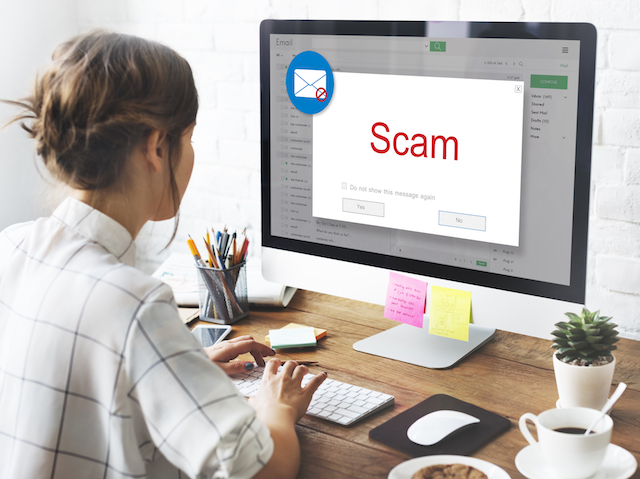
Along with this newfound technology came an unwelcome guest—the Nigerian Prince. The Nigerian Prince Email scam is one of the earliest examples of email fraud. It gained notoriety in the late 1990s and early 2000s when people began receiving emails from a “Nigerian Prince” asking for money upfront in exchange for a large sum of money later.
Essentially, the “Nigerian Prince” was claiming to need to get their considerable fortune out of their home country. He asked for your bank details so he could transfer the money to you so you could hold it for him. Once he got free of whatever situation he was in, he promised give you a sizable portion of his money to thank you. In another variation, he asked you to send him money up front to cover small expenses such a bank transfer fees or travel costs. After he escaped from his situation, then he promised to send you a massive monetary reward. Of course, once the scammer had your bank account details, he’d drain your funds.
It seems silly in the modern era. Internet scams and cyber crimes have become so much more sophisticated these days. But back in the 90s, this was the scam to watch out for. Back then, with the internet seeming like an endless array of possibilities, then why couldn’t this really be a prince?
Thankfully, I never turned over any money. Neither had any of my friends; we were young and didn’t have bank accounts. But I do remember having long discussions with my friends, wondering what if the Nigerian Prince was real. Clearly, we were working very hard to convince ourselves that a huge windfall of money was right at our fingertips.
But even though I was quite young during this time period and I had no idea what the internet was capable of (or what it would become, in time) my gut told me that the Nigerian Prince was too good to be true. A scam. For the first time, I realized that the internet wasn’t all fun and games; there were some dishonest people that could slide into my inbox and try to steal from me.
How did I know? Well, the Nigerian Prince really couldn’t spell all that well.
The email was full of typos and grammar errors. They were very apparent to me, even at a young age. That was, to me, a dead giveaway. I figured any royal family member, mega businessman, or government official would have enough command over the English lesson to not make a bunch of mistakes—especially when millions of dollars were supposedly on the line.
It’s easy to look back and laugh at the naivety of yesteryear, but there’s an important business lesson here. The Nigerian Prince emails were so easily spotted as scams because of their terrible grammar and spelling mistakes.
It’s a useful reminder that if you want to do business with people, then it helps to have competent command of the English language. Your grammar and spelling matter; they are an indicator of your professionalism and knowledge. We need to be respectful, professional, and knowledgeable in our work—and grammar and spelling exemplifies that.
Your business is not a scam. But unfortunately, because of the Nigerian Prince and countless other online scams, people have grown wary of businesses that have too many spelling and grammar errors in their written content—be it their website, email campaigns, social media posts, etc.
Here at English Outsourced, we step in and clean up your business content so that it shines at native English-speaking levels. We specialize in helping businesses that are owned by people who speak English as a second language. Click here to discover what English Outsourced can do for you and your business today.
Recent Posts
July 10, 2023 Introduction As a business owner communicating in English—perhaps as your second language—you’re likely keenly aware of the grammar rules that frame this intricate language....
June 25, 2023 Introduction In an increasingly globalized business landscape, a strong command of the English language is an invaluable asset. It can bridge cultural gaps, foster meaningful...