March 27, 2023
Introduction
I come from the novel writing world. I’m a huge fan of both reading and writing fiction and have published several novels.
When I speak with other authors like myself, one of the big milestones of their career is getting a foreign edition of their book done—having their book translated into another language. Common translated editions that tend to do well for authors are German and Czech translations.
Having your book translated into another language is a massive achievement for authors because it means a publisher thinks their book will have enough appeal in their country that it’s worth the time and effort to translate it, and that once the translated edition goes on sale, everyone will profit.
A big milestone like this means scammers have invaded the niche. I’ve heard horror stories from authors who fell for offers from people to translate their book for an upfront fee, and when they got the translation back, it all looked well and good (because they don’t speak the language). But when they showed their book to bilingual people, they got the bad news: the translation didn’t make a whole lot of sense and didn’t read well. These people said they felt pretty confident that the scammer had just churned their manuscript through an auto-translation software and send it back as is.
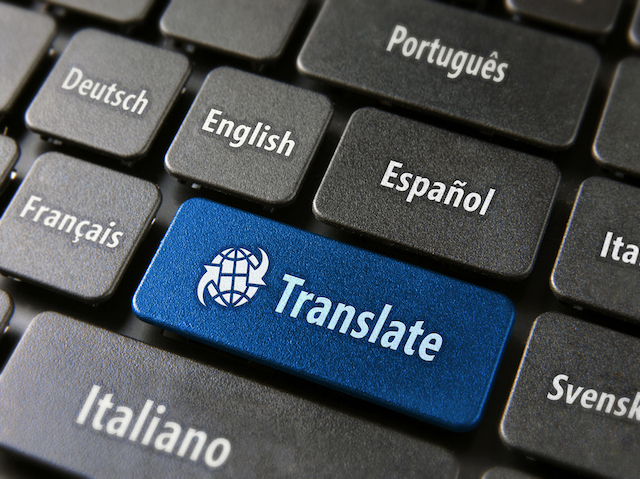
This got me thinking. It’s pretty common that I come across a business website that’s written in the first language of the business owner (not English). My web browser has a nifty feature where with one click I can automatically translate the entire website into English.
If you’re a business owner that has a website primarily in a language other than English, should you rely on this auto-translate function from web browsers?
What Is Auto-Translation?
Auto-translation is a feature in some web browsers that allows you to automatically translate text on websites from one language to another. While this may sound like a great and convenient service, there are several misconceptions about the accuracy and reliability of auto-translation. In addition, there are certain challenges and limitations associated with using web browsers’ auto-translation.
Challenges and Limitations
In addition to its potential inaccuracy, web browsers’ auto-translation features come with a number of challenges and limitations. For example, auto-translations may not be able to accurately translate idioms, slang, or technical jargon. This can be problematic for business owners who rely on translating technical documents from one language to another.
Moreover, auto-translation services often cannot accurately interpret the context of a sentence or the tone of voice in which something is said. This makes it difficult to communicate nuances and subtleties from the source language to the target language.
Different Web Browsers
I’ll admit that Google’s translation services have come a long way, especially in the last couple of years. I’ve even heard some experts say that learning new languages will soon be a moot point since we’ll have easily accessible technology that’ll translate everyone’s speech instantly and accurately.
But we’re not quite there yet, in my opinion.
And also, you can’t assume that everyone will be using Google Chrome. There are a myriad of web browsers out there that might not have a translation feature that’s as accurate as Google’s. There’ll also be some browsers that don’t have a translate function at all. Potential clients and customers who arrive at your website expecting English will be forced to immediately bounce.
What To Do
So what should you do?
In my opinion, the best way to handle this is to take some time to create multiple versions of your website, one for each language. You can use an auto-translation software to create the English version if you want, but I would highly recommend not doing what I mentioned at the beginning of this article when discussing the scammers selling lazy translations to authors: don’t just churn your website through some software and call it a day. Take some time to read through it and make sure it came out right on the other end.
I can’t tell you how many business websites I’ve seen where the owner just copy/pasted what some software had given him, leaving the English version of his website reading quite poorly.
Should You Never Use Your Native Language On Your Business Website?
Since English is widely considered to be the worldwide business language, you might wonder if it’s even worth having your business website set up in your own language.
I think it is.
In my mind, having a version of your business website in your native tongue grounds your business in a location. It gives it some flavor. It lets visitors know a little bit about you and where you’re from. It shows that you are willing to do business with the entire world, but are also willing to give a nod toward your roots. That kind of authenticity is invaluable in today’s economy.
Conclusion
Given the aforementioned challenges and limitations, it’s important for business owners who speak English as a second language to consider alternatives to web browsers’ auto-translation services. If you’re much more comfortable in your native tongue and aren’t sure about the English on your website, there’s no need to worry—at English Outsourced, our team of native English speakers can help you enhance your content so that it meets native-English standards, allowing you to acquire more western clients and customers. Contact us today for more information!
Recent Posts
July 10, 2023 Introduction As a business owner communicating in English—perhaps as your second language—you’re likely keenly aware of the grammar rules that frame this intricate language....
June 25, 2023 Introduction In an increasingly globalized business landscape, a strong command of the English language is an invaluable asset. It can bridge cultural gaps, foster meaningful...